
2026 Schedule of Events
2026 Educational Opportunities are posted below
THEME – EARTHQUAKE’S & TSUNAMI’S (thru 8-31-26)
(New Educational Theme starts in September 2026)
We Feed People Screening
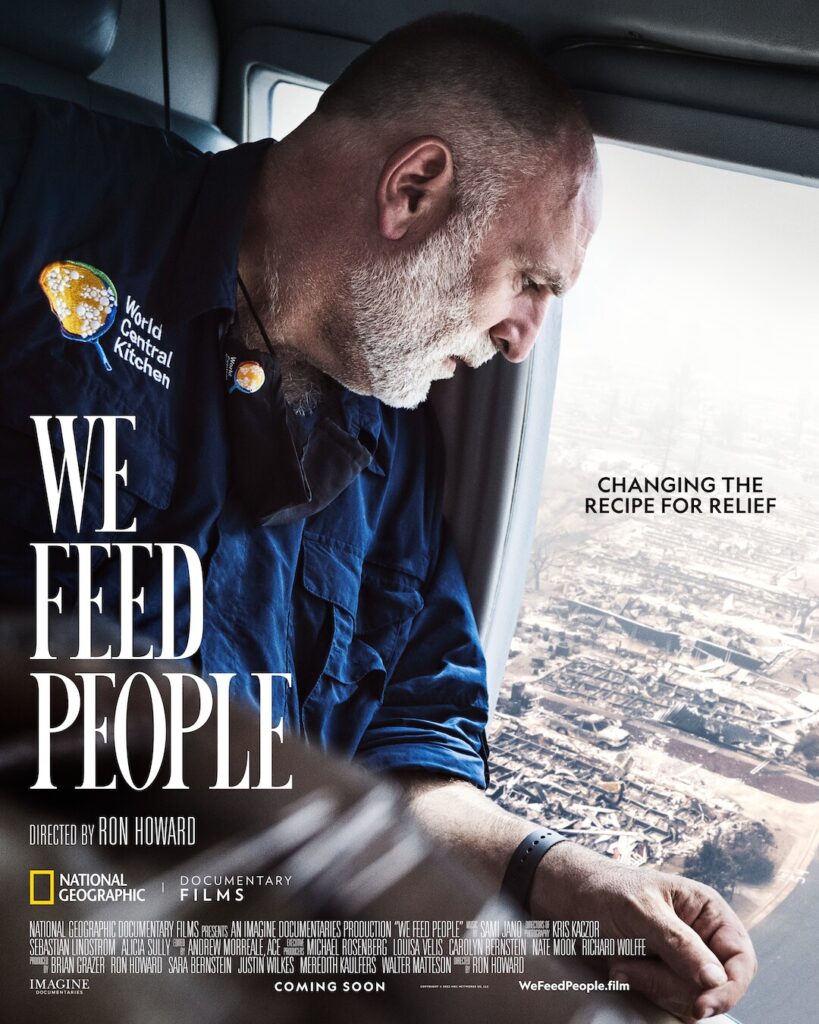
February 11 – 5:00 pm – 7:00 pm
Location: San Juan Island Grange #966
Free, Donations accepted, Snacks and Beverages available to purchase.
WE FEED PEOPLE, from OscarⓇ-winning director Ron Howard, spotlights renowned chef José Andrés and his nonprofit World Central Kitchen’s incredible mission and evolution over 12 years, from being a scrappy group of grassroots volunteers to becoming one of the most highly regarded humanitarian aid organizations in the disaster relief sector.
Click Here to see trailer and learn more.
Following film, brief introduction of Food Security Coalition concept, with overview of readiness on San Juan Island, and proposal of long term sustainable food security. Click Here to view Introduction to Food Security Coalition Group Discussion Following.
Mutual Aid Response Team Training
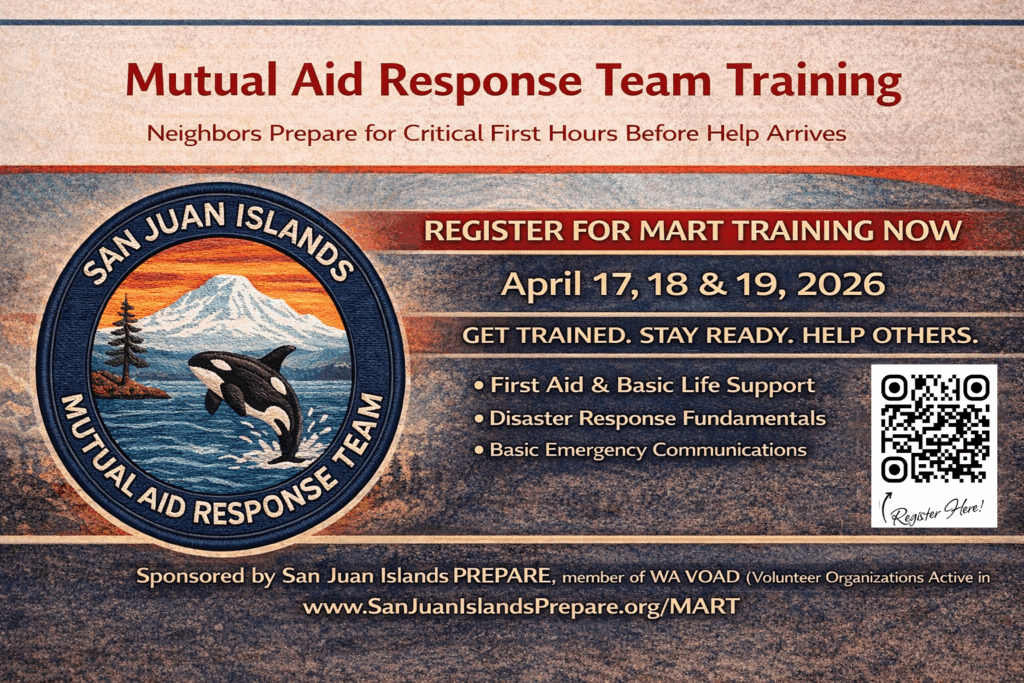
SPRING – MART Training (Mutual Aid Response Team)
First training will be in Spring 2026. Click Here for more information and to pre-register. Space is limited. Early registration is advised.
2026 PREPAREDNESS CONSORTIUM has been cancelled. These classes were awarded to San Juan Islands PREPARE and based upon FEMA education modules. In 2025, FEMA was transferred to DHS (Department of Homeland Security). Because of receive violence against American Citizens from ICE, as directed from DHS, San Juan Islands Prepare has voluntarily forfeited the grant for the Consortium. We are working to find local trainers to teach related courses and will announce soon when we have commitments from trainers solidified.
Earthquake and Tsunami Preparedness: (Resource: Ready.gov)
- Learn the signs of a potential tsunami, such as an earthquake, a loud roar from the ocean, or unusual ocean behavior, such as a sudden rise or wall of water or sudden draining of water showing the ocean floor.
- Know and practice community evacuation plans. Some at-risk communities have maps with evacuation zones and routes. Map out your routes from home, work and play. Pick shelters 100 feet or more above sea level, or at least one mile inland.
- Create a family emergency communication plan that has an out-of-state contact. Plan where to meet if you get separated.
- Sign up for your community’s warning system. The Emergency Alert System (EAS) and National Oceanic and Atmospheric Administration (NOAA) Weather Radio also provide emergency alerts.
- Consider earthquake insurance and a flood insurance policy through the National Flood Insurance Program (NFIP). Standard homeowner’s insurance does not cover flood or earthquake damage.
SURVIVE DURING 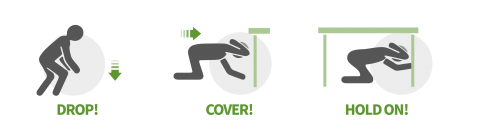
- If there is an earthquake and you are in a tsunami area, protect yourself from the earthquake first. Drop, Cover, and Hold On. Drop to your hands and knees. Cover your head and neck with your arms. Hold on to any sturdy furniture until the shaking stops. Crawl only if you can reach a better cover, but do not go through an area with more debris.
When the shaking stops, if there are natural signs or official warnings of a tsunami, move immediately to a safe place as high and as far inland as possible. Listen to the authorities, but do not wait for tsunami warnings and evacuation orders.
If you are outside of the tsunami hazard zone and receive a warning, stay where you are unless officials tell you otherwise.
Leave immediately if you are told to do so. Evacuation routes often are marked by a wave with an arrow in the direction of higher ground.
If you are in the water, then grab onto something that floats, such as a raft or tree trunk.
If you are in a boat, face the direction of the waves and head out to sea. If you are in a harbor, go inland.
Be Safe AFTER
Listen to local alerts and authorities for information on areas to avoid and shelter locations.
Save phone calls for emergencies. Phone systems often are down or busy after a disaster. Use text messages or social media to communicate with family and friends.
Avoid wading in floodwater, which can contain dangerous debris. Water may be deeper than it appears.
Be aware of the risk of electrocution. Underground or downed power lines can electrically charge water. Do not touch electrical equipment if it is wet or if you are standing in water.
Stay away from damaged buildings, roads and bridges.
If you become injured or sick and need medical attention, contact your healthcare provider and shelter in place, if possible. Call 9-1-1 if you are experiencing a medical emergency.
Document property damage with photographs. Conduct an inventory and contact your insurance company for assistance.